Free Things to Do in Balboa Park
Most of the best of Balboa Park costs nothing — the gardens, the architecture, the organ on a Sunday. Here's which free is worth your morning, and which is a tourist time-sink.
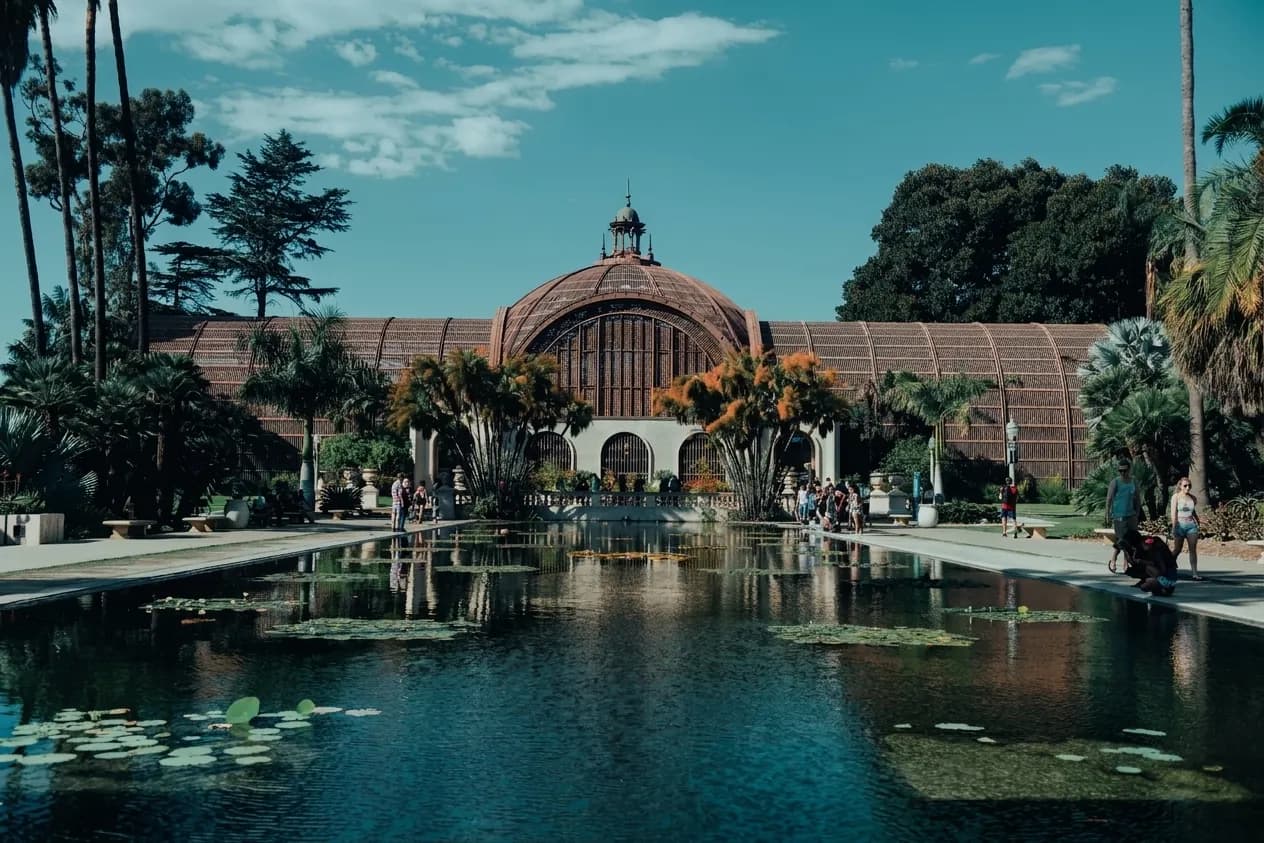
Here's the thing locals know that the guidebooks bury: the most expensive-feeling part of Balboa Park is the part that costs nothing. You can spend a morning here without buying a ticket and come away convinced you saw the best of it — because the architecture, the gardens, and the long arcaded promenade down El Prado are the headline act, and the museums housed behind those facades are, for a first visit, the supporting cast. The buildings you'll walk past were never meant to last; they were stage sets for a 1915 world's fair, built in plaster to be torn down, and San Diego loved them too much to let them go. What that means for a free morning is simple. Walk the Prado, sit in a garden, catch the organ if the day lines up, and save your admission dollars for the one or two museums that actually pull you in. The taste move isn't doing everything for free. It's knowing which free is the good free.
The free, in order
Not a flat list. Ranked by a local's actual call — what's worth your morning first, and what to do only if you've got the time.
Walking El Prado and the park architecture
Always freeThis is the one to do first and the one most visitors do last, if at all, because it doesn't have a ticket booth telling them it matters. The central promenade — the arcades, the tiled domes, the California Tower rising over it all — is the reason the park feels like a small European city dropped into San Diego. Go in the morning before the crowds and the light is doing its best work on the ochre plaster. You will not pay for any of it, and it is the best thing here.
The free gardens
Free to enterMost of the park's gardens are free to walk into, and they're not an afterthought — they're a network. The lily pond and the lath-house Botanical Building anchor the middle of the Prado; the rose and desert gardens sit together across a footbridge; the small formal Alcazar garden hides beside the California Tower. A loop through two or three of them is a quiet, unhurried hour and costs nothing. The one to know about is the Japanese Friendship Garden, which charges admission — worth it on its own terms, but not part of the free loop, so don't drift in expecting it to be.
The Spreckels Organ Pavilion concert
Free on a scheduleThe world's largest outdoor pipe organ sits in a domed pavilion at the south end of the park, and it gets played for free, in the open air, at 2pm every Sunday afternoon — a civic ritual San Diego has kept up for over a century. Sitting in the curved stone seating while the thing fills the whole bowl with sound is the kind of generosity that's hard to find anymore. Summer adds a bonus most visitors miss: a free Monday-evening organ festival at 7:30 that sometimes scores silent films live. If a Sunday lines up, this is the highest-value free hour in the park.
Spanish Village Art Center
Free to walk throughThis earns its place because the artists actually work here — a tiled courtyard of studios tucked behind the Natural History Museum, free to wander, where the painters and potters keep their rooms open and mid-project rather than just hanging finished pieces. It's a genuine 15-to-30-minute detour, not a destination, so go for the courtyard itself — one of the most photographed corners of the park — and stay if a studio door is open and someone's at the wheel.
Resident Free Tuesdays at the museums
Free for residentsMany of the paid museums and gardens run Resident Free Tuesdays — rotating free-admission days for San Diego residents, who get in by showing proof of residency at the door. That's the local's actual move: pick the place you most want, find the Tuesday it's free, and time your visit to it. It takes a little homework and pays off the most. For a visitor without residency it won't apply, but the specific free-Tuesday rotation changes through the year, so confirm the date for your museum before you count on it.
The free guided park walks
Free on a scheduleThe park runs free volunteer-led walking tours that cover the history, the architecture, and the gardens — the kind of orientation that makes the rest of the park legible. It's the most skippable item on this list if you're short on time and the least skippable if it's your first visit and you want the buildings to mean something. Check the current schedule before you go; these run on set days and can pause seasonally.
Climbing the California Tower
$10, on top of Museum of Us admissionAlmost everything here is free, so here's the one climb worth breaking your own rule for. The California Tower — the tiled bell tower that crowns the skyline of every Balboa Park photo — sat closed to the public for most of a century before the Museum of Us reopened it, and now runs a roughly 40-minute guided climb, capped at a handful of people, up around 125 steps with no elevator. You go up unassisted, so it's a real climb and not a museum walk, and the payoff is the high deck: a slow 360 over the Coronado Bridge, downtown, the islands, and on a clear day the haze of Tijuana, with hawks working the canyons below. The catch worth knowing before you commit — the $10 ticket sits on top of Museum of Us admission rather than inside it, and the tours fill, so book ahead online. Worth it for the view and the vertigo; leave it if stairs or heights aren't your idea of a morning.
Parking, the tram, and the hours
Start with parking, because it recently changed and trips people up: the park's lots used to be the rare free parking in San Diego, and they aren't anymore — the full breakdown is in the box below, but the short version is a few dollars to sixteen a day, with one free three-hour lot at Lower Inspiration Point and a shuttle in for the thrifty. The lots closest to the Prado and the museums still fill first, fastest on weekends and holidays, so the local move is to arrive earlier than feels reasonable or take an edge lot and walk the long way in past the gardens. There's a free tram that loops the main lots and drop-off points and saves the haul from the far parking — the kind of small civic kindness that makes the edge lots painless. Easiest approach is by car off the 163 or Park Boulevard, and while the grounds are open daily, every building and garden keeps its own hours — check the one you actually came for rather than trusting the park's.
Paid parking has applied since January 5, 2026, enforced daily 8am–6pm (holidays exempt). The City's lots are tiered. In the Level 1 lots nearest the Prado, verified San Diego residents pay $5 for up to four hours or $8 a day, and non-residents $10 for four hours or $16 a day. Level 2 lots are free for residents, $10 a day otherwise. And the move if you're staying a morning: the Level 3 lot out at Inspiration Point on Presidents Way is free for up to three hours for everyone, with a free shuttle that runs into the park every 10–15 minutes from 8am to 8pm. Roadside meters run $2.50/hr up to $10 a day. To get the resident rate you have to register your plate online ahead of time — a one-time $5 fee, up to two business days to clear. A May 2026 city settlement is set to end paid parking no later than January 1, 2027, but it's still pending a formal council vote, so check current rules before you count on either the fee or its end.
Parking details verified June 2026
Morning, and the right schedule
Morning is the answer, and not only for the light. The Prado is quietest before the museums open and the tour groups arrive, the air off the gardens is still cool, and the lots haven't filled. Two free fixtures reward a little planning. The organ plays in the open air at 2pm every Sunday, and there's a particular pleasure in sitting in the curved stone seats while the pipes fill the whole bowl with sound — turn up early enough to claim one. The other is for locals: the park's museums have long run resident-free days — usually a Tuesday, usually asking for proof of San Diego residency at the door — and catching one turns a free park morning into a free museum afternoon. Which museum and which day moves around through the year, so check the program for the one you want before you go. And the quietest, best-lit stretch of all is the first hour after the lots open — empty arcades, low gold light on the plaster, the fountains running before anyone's there to hear them.
Where to eat around the park
Balboa Park has food inside it, but the good stuff is in the neighborhoods that ring it. Two short drives or longish walks — one for a cheap, fast bite that keeps the free morning going, one for a proper sit-down when you're ready to stop being thrifty.
Papas & Tacos Mexican Food
Restaurant
A few minutes west of the park in Bankers Hill — counter tacos, cheap and quick, the kind of bite that keeps a free morning free without slowing it down. Order at the window and keep moving.
CUCINA urbana
Restaurant
The sit-down counter to the taco stand — an easy, unfussy Italian room in Bankers Hill, close enough to the park's west edge to walk on a good day. The place to land when the free morning's done its job and you're ready to spend a little.
Questions people ask
- Is Balboa Park free to enter?
- Yes, and it's the best free thing in San Diego. The grounds are open to the public every day — the Prado, the gardens, the plazas, the architecture — and none of it charges admission. You pay only for the individual museums and a couple of the ticketed attractions inside; walking the park itself is, and always has been, free.
- Is parking free at Balboa Park?
- Not anymore, mostly. Paid parking has applied since January 5, 2026 — lots run $5 to $16 a day and roadside spots $2.50 an hour, enforced daily from 8am to 6pm, with tiered rates that favor San Diego residents. The exception worth knowing: the Inspiration Point lot on Presidents Way is free for everyone up to three hours, with a free shuttle that runs into the park. A May 2026 city settlement may end paid parking by January 2027, but it's still pending a council vote, so check the current rules before you go.
- Are the museums in Balboa Park free?
- Most of the museums charge admission, but not all the time and not all of them. The Timken Museum of Art is free year-round. Many of the others run Resident Free Tuesdays — a rotating schedule of free-admission days for San Diego residents, who show proof of residency at the door — which is the best way for a local to see them for nothing. The specific free-Tuesday rotation changes through the year, so confirm the date for the museum you want before you plan around it.
- Is Balboa Park free for kids?
- Wide open and free, yes — the grounds, gardens, and architecture cost nothing at any age, and a kid will get more out of the lawns, the koi in the lily pond, and the studios at Spanish Village than out of half the ticketed museums anyway. Individual museums set their own admission, and many run reduced or free pricing for children, with the youngest often free — check the one you're heading for. The outdoor park is the free part, and it's the better part for kids.
- What's the best free day to visit Balboa Park?
- Any morning, frankly — the free part of the park is free every day. Two fixtures are worth timing to: the free organ concert at 2pm every Sunday, and Resident Free Tuesdays, when a rotating museum opens free to San Diego residents who show proof of residency. To fold a free museum into a free park morning, find the Tuesday your museum is free and go then; the rotation changes through the year, so confirm the date first. Weekday mornings are the quietest version of any of it.
Around Balboa Park
Balboa Park — the full guide
Up a level: how to shape one good day in the park, the Zoo, the gardens and museums, December Nights, and the practical stuff — the hub this free guide hangs off.
Bankers Hill
The neighborhood off the park's west edge — where the good eating is, from counter tacos to a proper sit-down dinner, a short walk from the Prado.
North Park
San Diego's most interesting food-and-beer neighborhood, a few minutes east of the park — the place to land after a long morning of walking.